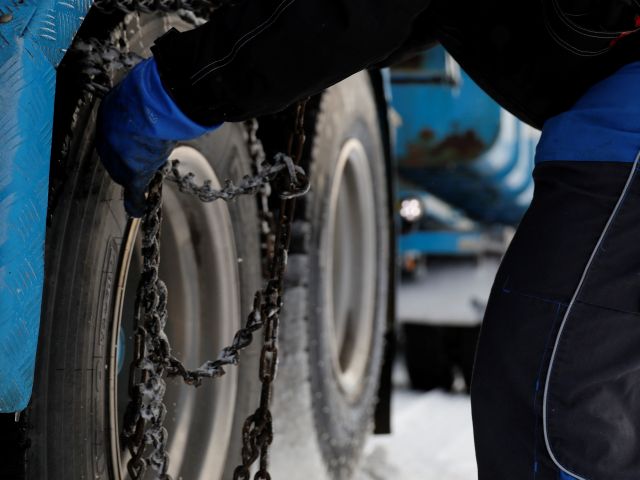
Tire chains are an old and proven method for getting traction in icy road conditions. Even if chains look similar, there are different types of chains for the truck driver to consider. And, as usual, different types have different benefits. Your final choice should be a result of your specific needs and preferences.
Automatic tire chains - limitations and precautions
Eric Jones, September 9, 2020
There is no such thing as 'the perfect traction aid.' All different methods for increasing traction have their specific advantages. Accordingly, your choice of traction aid should be the optimal compromise for your personal needs, taking into account the features and benefits the different methods offer. When deciding on your traction aid, excluding options due to limitations or other cons could be one approach. So, which are the limitations of automatic tire chains?
Despite the fact that automatic tire chains by most experienced users are considered the most convenient and preferred choice, there are drawbacks you should be aware of.

Why an automatic tire chain system?
Ulrik Andersson, September 4, 2020
Why should anyone invest in an automatic tire chain system? Existing choices for increasing traction in slippery conditions have long been in use. Read more here about all the options.
Onspot operating instructions to give to your drivers
Ulrik Andersson, September 3, 2020
Before we know it, we will be in the winter season when roads will look like in the picture above. To get the most out of their Onspot investment, many fleet managers supply their drivers with checklists. These checklists make it easy for drivers to maintain the vehicle. Learn more and download the checklist here.
How to Measure for your Onspot System
Leonard D'Orlando, August 20, 2020
It is important to understand that Onspot is not a one-size-fits-all product due to the variety of vehicles used across a multitude of industries. More importantly for a fleet manager and it cannot be emphasized enough, one cannot assume that “sister chassis” are identical so measurement of every truck is highly recommended.
As a fleet manager, running a cost effective and efficient fleet safely is paramount to its success. This is a challenge that must be faced and overcome on a daily basis. When presented with any number of external forces out of the control of the fleet operator, then this process becomes even more difficult. The ability to run a fleet in inclement weather mainly snow and ice conditions is one such challenge.
Throughout the year you are reading new blog posts covering different topics about automatic tire chains. The posts cover topics such as before you invest, installation and maintaining the system. We have collected the most popular blog texts below. Please click on them to read and learn more:
Improving fleet productivity, an ebook
Eric Jones, July 23, 2020
The need for commercial freight and logistic services has never been higher. However, the firms and entrepreneurs operating in this space continue to see extremely tight operating margins.
When it comes to the Onspot automatic tire chain system there are many advantages. Through the simple push of a dashboard switch the chain wheels are engaged providing the driver with traction on snow and ice. It is not necessary for the driver to get out of the vehicle and manually strap chains on the tires. The driver can stay in the cab of the vehicle, avoiding the harsh winter conditions, the dangers of chaining up on the side of the road, and the overall physical exertion associated with conventional chains. This is all well and good for the driver.
Onspot: benefits for everyone
Leonard D'Orlando, June 25, 2020
The wait is over and the Onspot automatic tire chain system has arrived. Soon traction on snow and ice will be as simple as flipping a dashboard mounted switch. Gone are the days of having to get out in inclement weather and manually “throw iron”. This is a tremendous benefit for any driver, but what about the mechanic?